
Uncategorized
Mushroom edibles: types, effects and what’s safe in the UK
Aug
mushroom edibles UK safety
Mushroom comestibles are quite numerous. They range from lion’s mane gummies available in a health store next to adaptogens and vitamins, to psychedelic chocolates advertised with claims that are similar to those of wellness products. In fact, they belong to different worlds, sharing little in the chemical, legal, and safety aspects, and very few customers realize this discrepancy until they experience some trouble with it.
Functional vs psychedelic: the two types of mushroom edibles
What functional mushroom edibles are
Mushrooms used as food are functional mushrooms like lion’s mane, reishi, chaga and cordyceps. They don’t contain any psilocybin and don’t produce any psychoactive effects. They can be found in the form of gummies, powders, drinks and capsules and are widely available in all kinds of health shops in the UK legally. The term “functional” means bioactive substances like beta-glucans, triterpenes, and hericenones and not any psychoactive alkaloids.
What psilocybin mushroom edibles are
Psilocybin edibles refer to edible products that contain psilocybin or psilocin, which has been derived from magic mushrooms. This category includes products such as gummies, chocolates and other types of infused confectionery. An example of such a product in the marketplace is One Up Mushroom Bars. In all respects, psilocybin edibles are fundamentally different from lions mane gummies, particularly in the legal and pharmacological context. It is important that a new buyer understands this distinction above all others.
What functional mushroom edibles actually do
Lion’s mane, reishi, cordyceps, and chaga: what’s in them
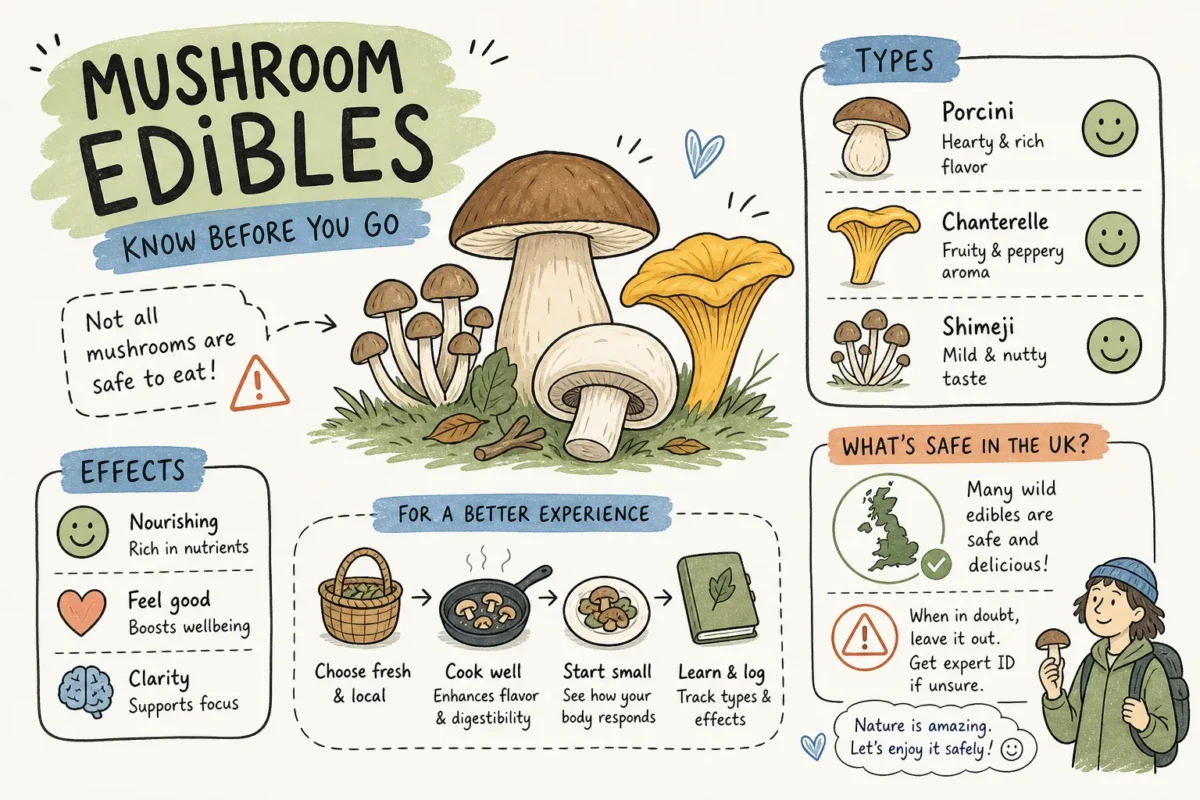
Lion’s mane comprises of hericenones and erinacines, both of which serve support nerve health and cognitive function and has the best human clinical evidence out of all four. Reishi has triterpenes and polysaccharides, which help with immune function and stress management and marketed as adaptogens. Cordyceps, commonly known as C. militaris in commercial products, is marketed for energy and stamina due to cordycepin and adenosine. Chaga has a different stance; it is mainly marketed based on the antioxidant effects of the polysaccharides and phenols albeit the human clinical evidence related to chaga is weaker than for the other three.
Mushroom edibles vs THC edibles: choosing the right experience
How the two experiences differ in practice
THC edibles act on the endocannabinoid system, producing relaxation, euphoria, appetite stimulation, and sometimes anxiety at higher doses. Onset is typically 30 to 90 minutes and duration runs four to eight hours. Psilocybin edibles act on serotonergic pathways and produce perceptual changes, introspection, and potentially intense emotional experiences lasting four to six hours. Functional mushroom edibles produce no acute psychoactive effect at all, they are wellness supplements, not recreational products. These are fundamentally different tools, and selecting betwHow the two experiences differ in practiceeen them depends entirely on the outcome you’re actually pursuing.
Where to find both under one roof
For those exploring multiple sides of this space, THC Vape Europe stocks both functional mushroom edibles and a full range of premium THC edibles sourced from reputable dispensaries. Products are lab-tested, shipped discreetly across Europe using double vacuum-sealed packaging, and available with transparent product information. Whether you’re starting with reishi and chaga edibles or comparing cannabis options, having access to both categories through a single trusted shop removes considerable uncertainty from the process.
The bottom line on mushroom edibles
Mushroom edibles cover a wider range of products than most people expect, from everyday wellness gummies to psychoactive chocolates with serious legal implications in the UK. The key is knowing exactly what you’re buying before it arrives. Functional mushroom edibles such as lion’s mane gummies are legal, well-documented, and carry relatively low risk when purchased from brands that provide batch-specific COAs from accredited laboratories.
Psilocybin mushroom edibles sit firmly outside UK law and carry additional safety risks from contamination and inconsistent dosing. The Diamond Shruumz case alone demonstrates that “mushroom edible” as a label category offers no guarantee about what’s actually inside. For anyone wanting to explore alternative edible experiences, whether plant-based, functional, or cannabis-derived, the difference between these two categories is something the Diamond Shruumz outcome made painfully clear: check the COA, verify the batch, and never assume the label tells the whole story.
